The Price of Ignorance
The Price of Ignorance
Commodified Education and Revolutionary Truths in the Regeneración newspaper (1900-1918)
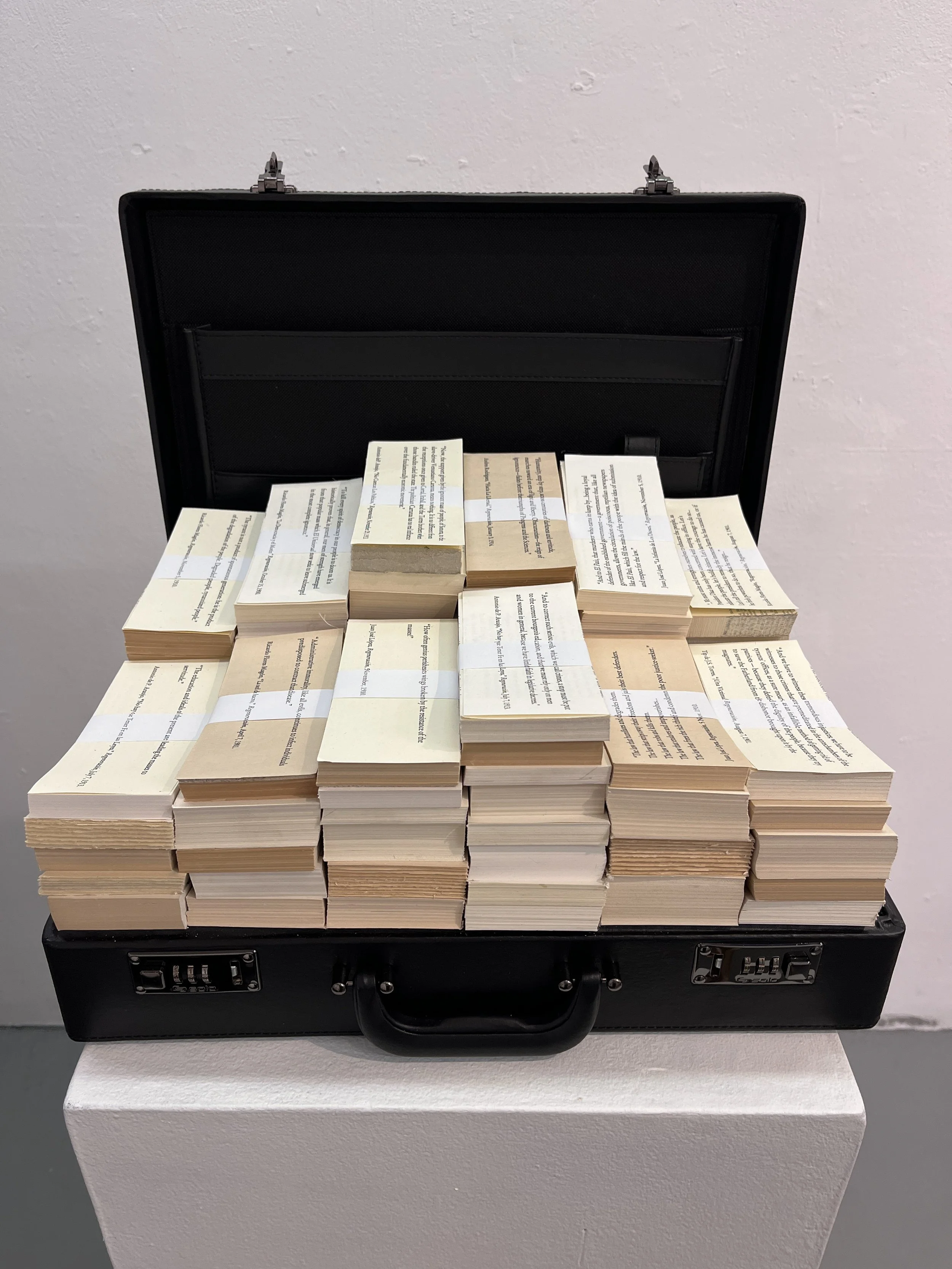
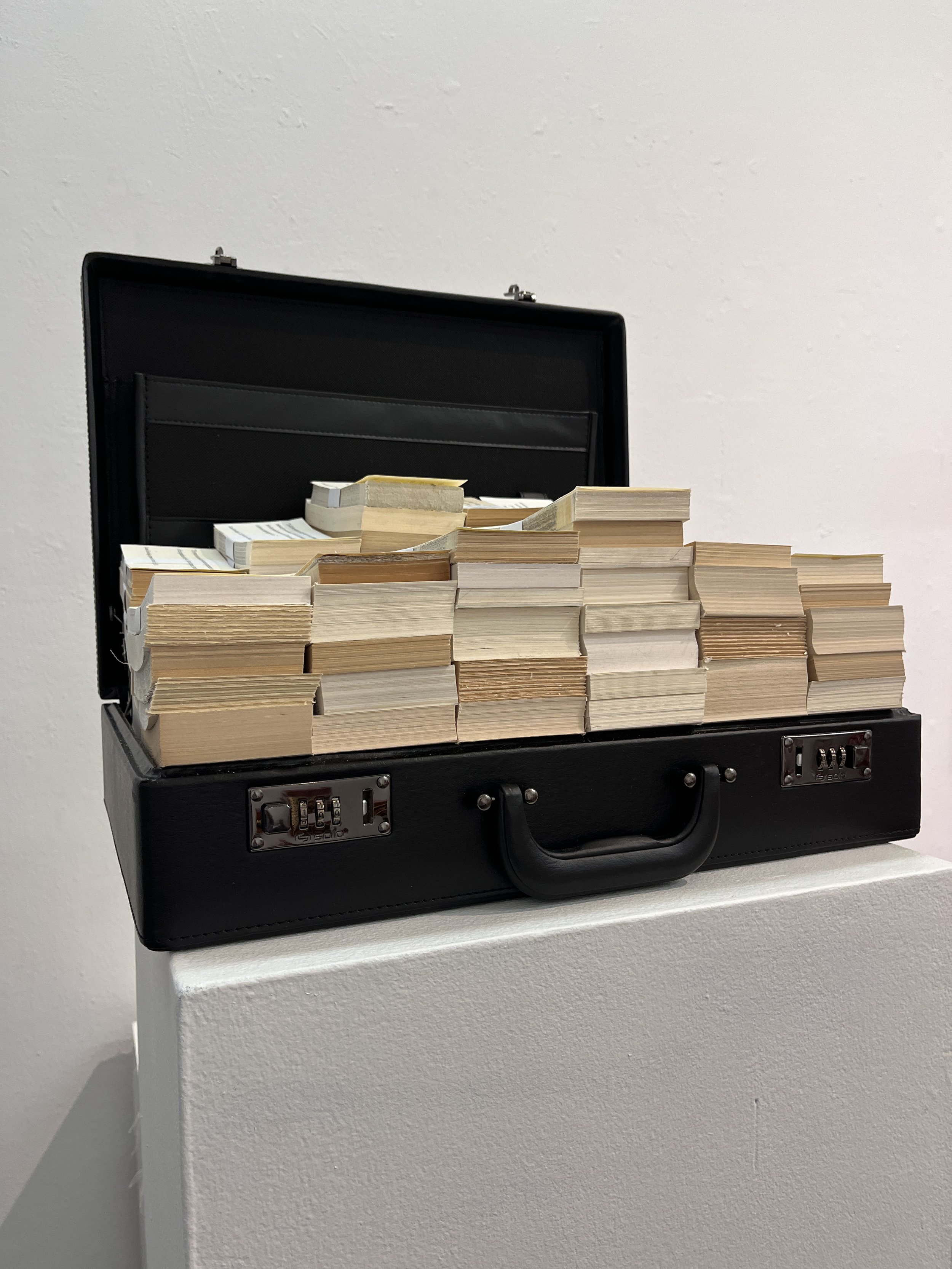
This art installation reflects on Mexico during the dictatorship of Porfirio Díaz (1876–1911) through the lens of the Regeneración newspaper published by Ricardo Flores Magón alongside his brother Jesús. The Magón brothers harshly criticized the commodification of education, political repression, and the silencing of enlightened voices. Their work advocated for the dismantling of systems that manipulated public understanding and suppressed the people's dignity.
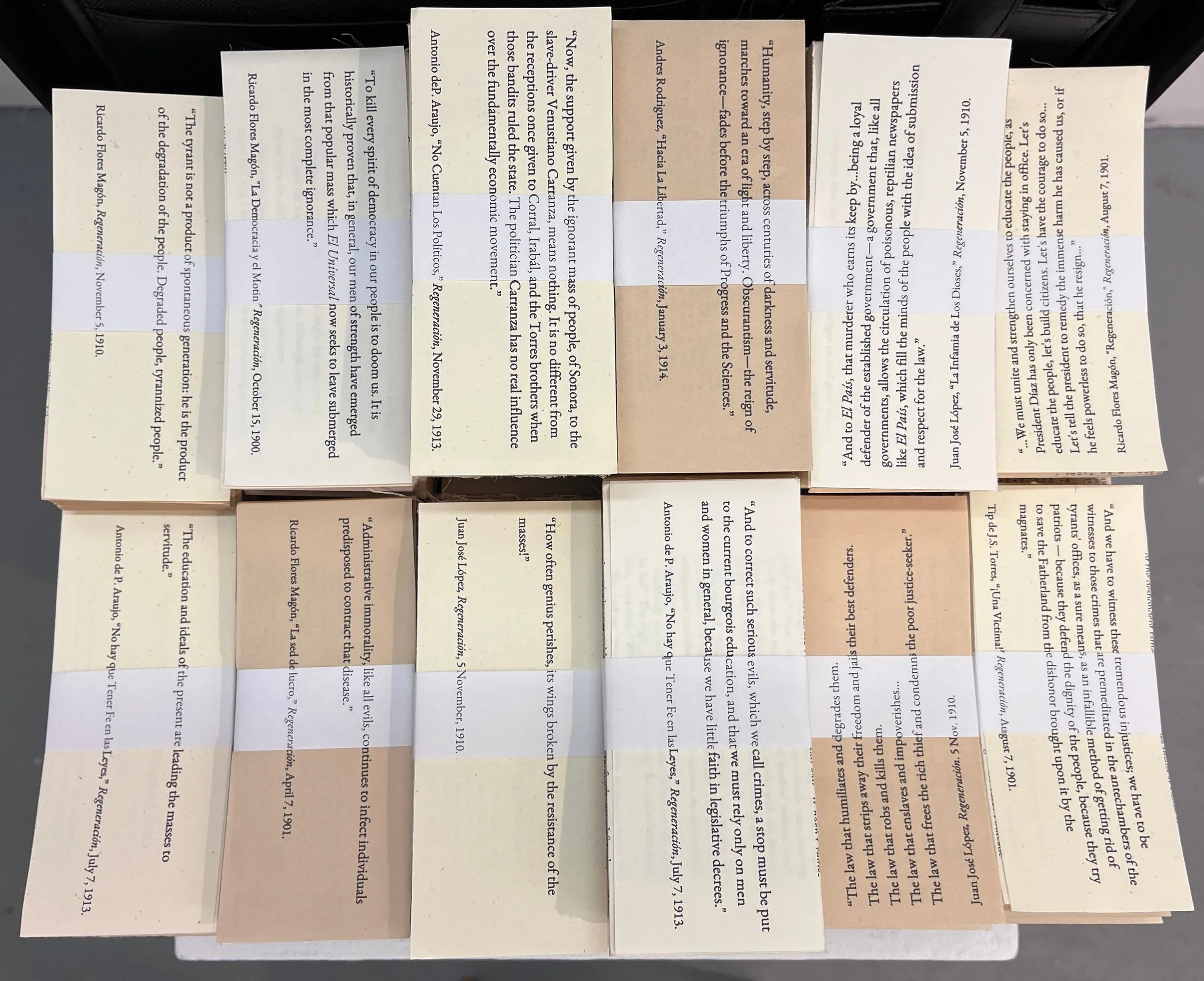
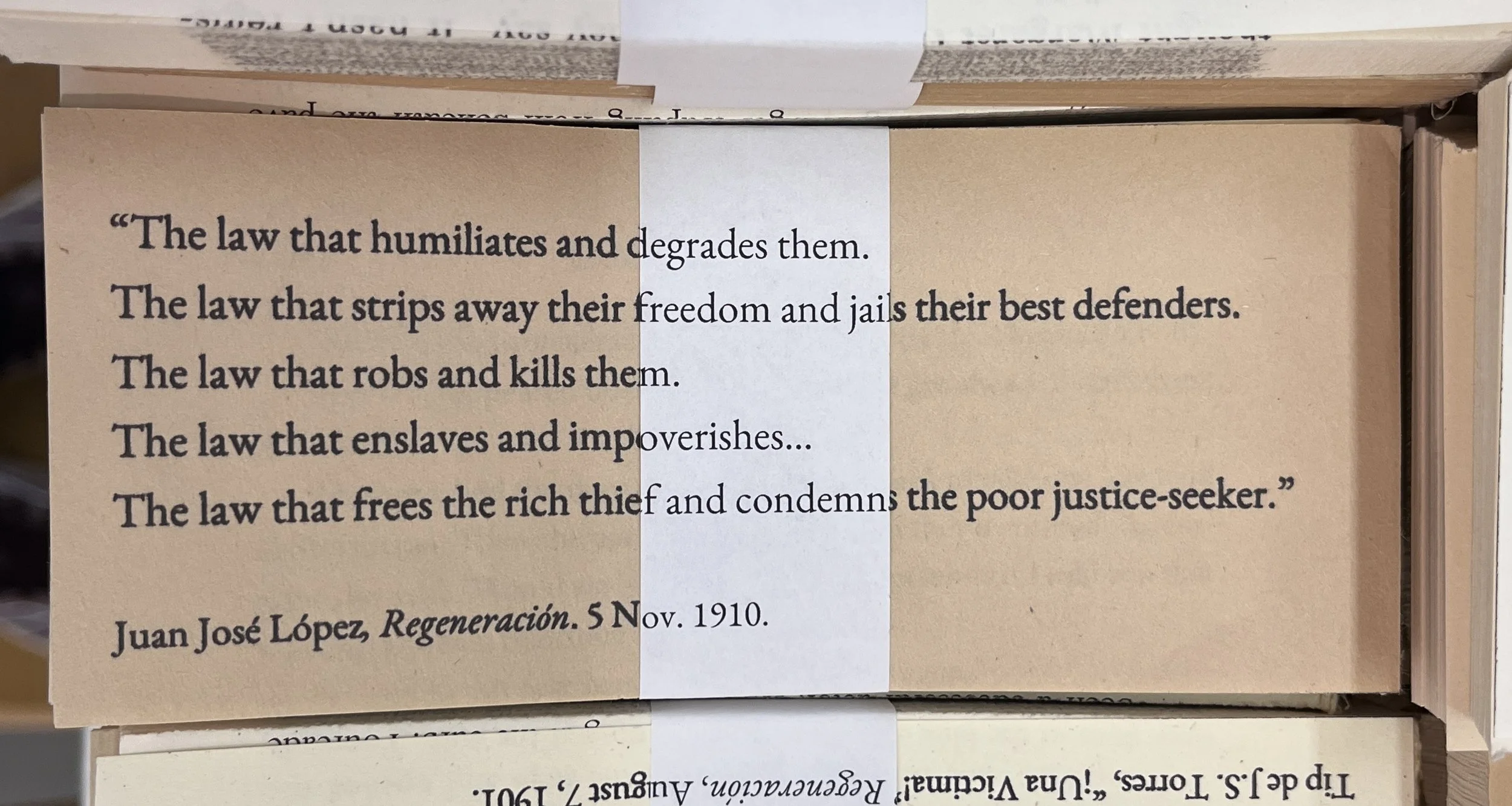
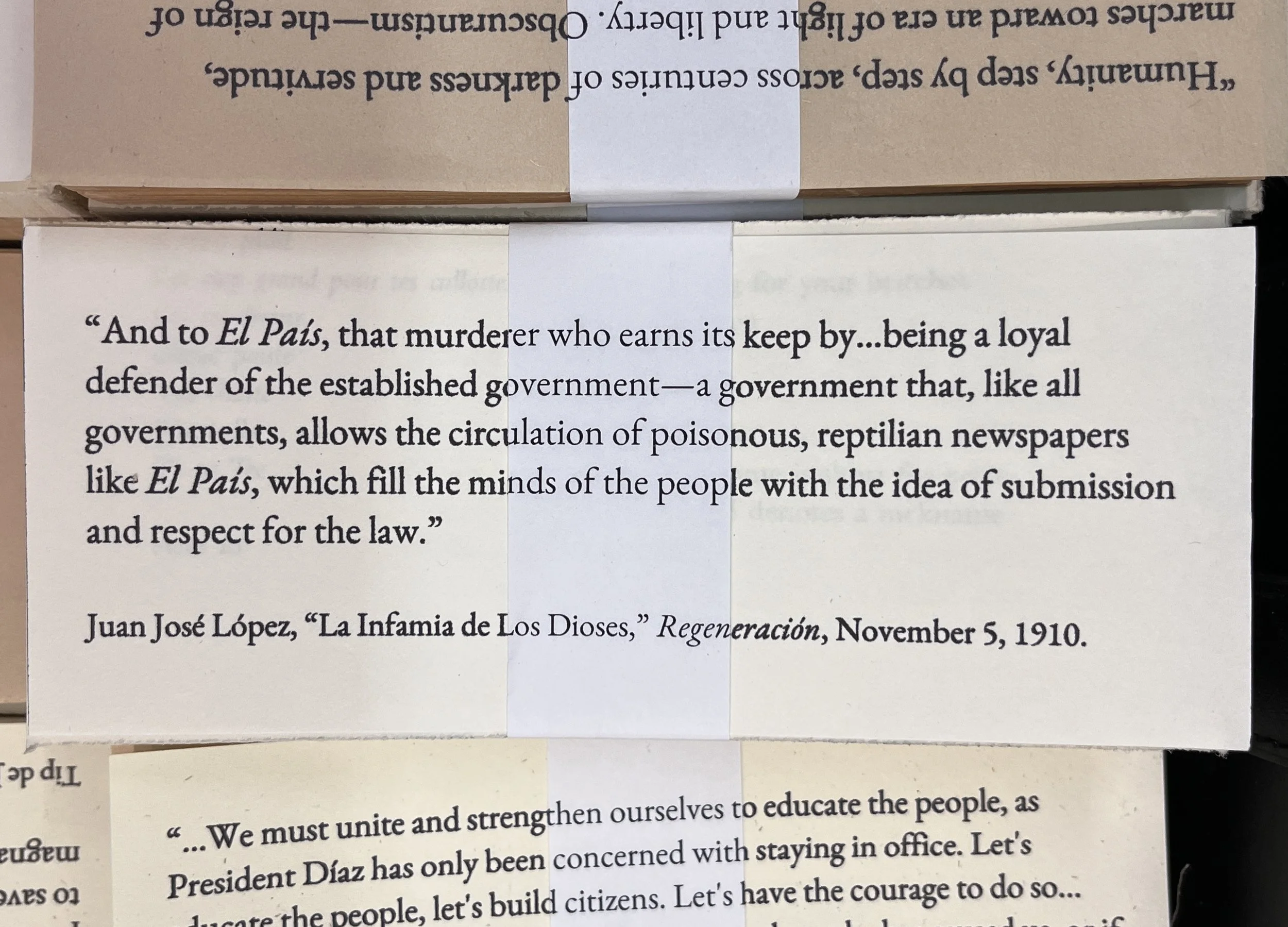
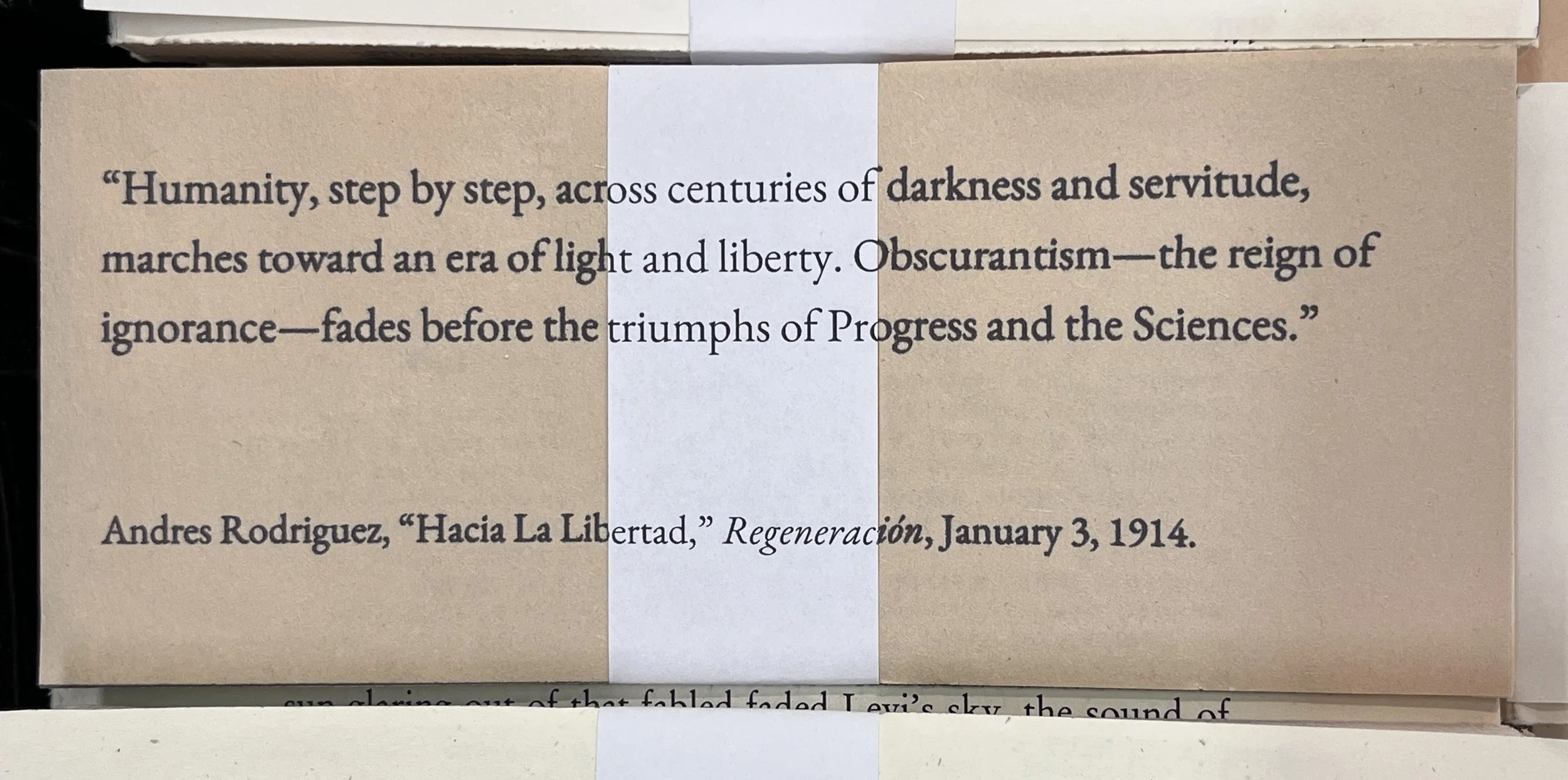
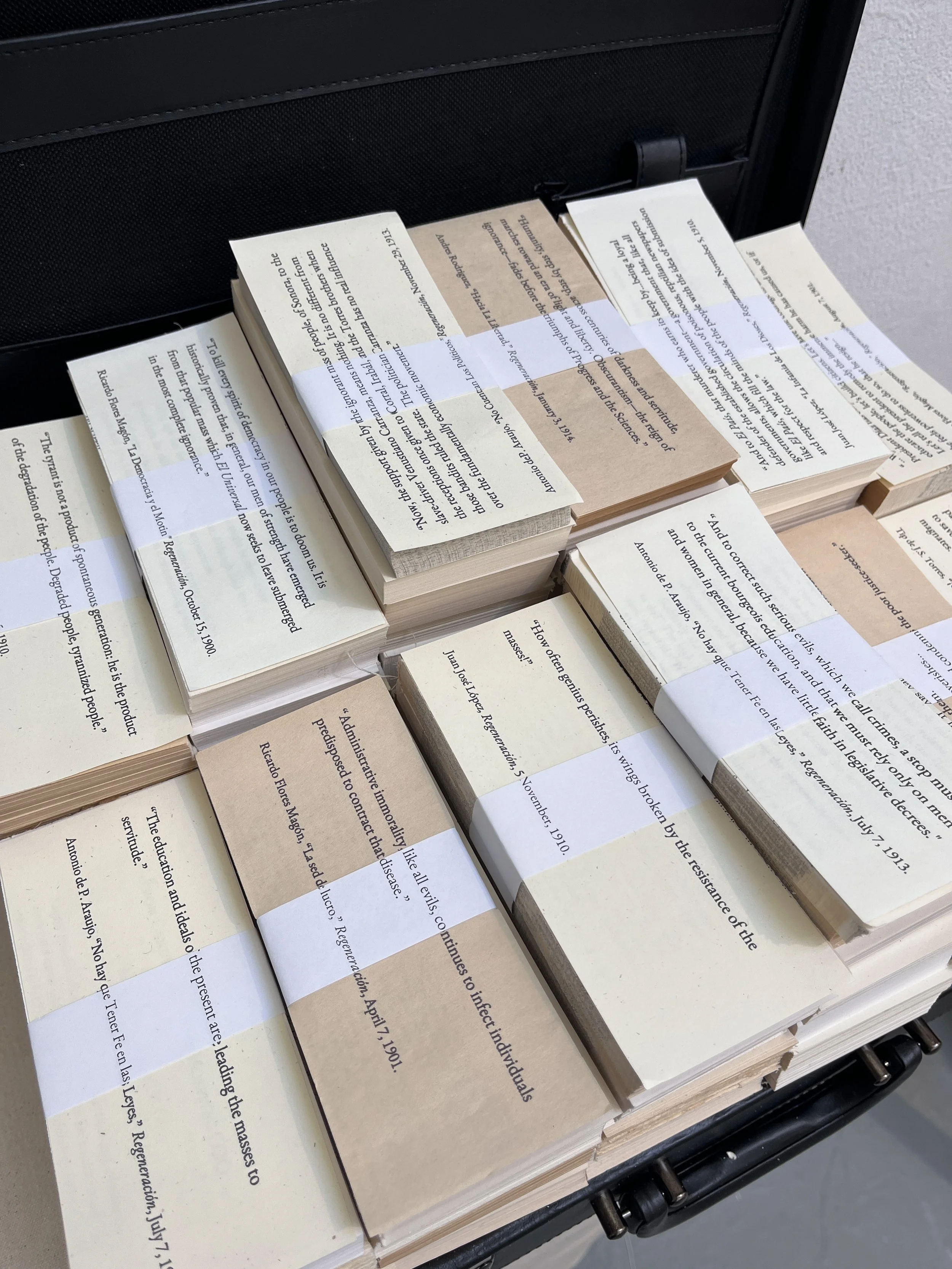
The installation features books cut and shaped to the size of U.S. dollar bills, assembled inside a leather briefcase to suggest the destruction and commodification of knowledge. The altered pages symbolize a transactional approach to information, where truth is traded for profit. It invites the viewer to ask the question: What are we willing to sacrifice in exchange for historical clarity and truth? Attached to the wads of "cash" are printed excerpts from Regeneración (1900–1918), chosen to highlight the paper's revolutionary stance against ignorance and dictatorship, and its call for the liberation of the miseducated. Several of these quotes refer to education as a system aligned with capitalist interests. For example, in a 1913 article by Antonio de P. Araujo, the writer rejects the “present bourgeois education” and instead urges reliance on the people rather than legislative decrees. This reflects deep skepticism toward both the legal and educational systems of the time, which were seen as complicit in sustaining inequality and repression. The paper repeatedly labeled willful ignorance as a crime, a moral and political failure engineered by elites. This critique remains relevant today, which is the meaning behind this installation as it draws parallels to Mexico’s regime. The United States currently faces widespread book bans and curriculum censorship, particularly concerning race, gender, and histories of oppression. Disinformation campaigns distort public understanding of critical topics such as climate change, immigration, and policing. Activists, such as Black Lives Matter organizers, Indigenous land defenders, and environmental justice advocates, have become targets of surveillance, and criminalization. Anti-protest laws have passed in multiple states, and terrorism-related charges have been used to repress climate and pipeline activists.
Under the Díaz regime, economic growth came at the cost of widespread intellectual suppression. The editors of Regeneración, particularly Ricardo Flores Magón, understood ignorance not merely as a lack of schooling but as a condition deliberately maintained by elites to prevent resistance. They saw it as a tool of domination, cultivated through censorship, religious authority, and state control over education. To them, ignorance was a form of internal colonization. Education, therefore, was revolutionary. By cutting books into the form of currency, it suggests that ignorance is and was always profitable. Today, the education system in the United States is often marketed to students who are treated as consumers. Higher education increasingly functions as a business, where degrees are traded for debt, and learning is framed as an economic investment.
Like the Porfiriato in Mexico, the U.S. educational system remains deeply ranked by class and race. Access to quality education is shaped by wealth, neighborhood zoning, and historic patterns of exclusion. The narratives taught in schools are frequently sanitized or distorted to maintain a national myth that conceals systemic injustice. In this way, the modern education system continues to feign innocence while fostering ignorance, echoing the very dynamics Regeneración sought to expose. This work invites viewers to consider how systems of power benefit from a miseducated populace and how revolutionary voices from differing generations continue to fight for an education that liberates rather than subdues.
Bibliography
Araujo, Antonio de P. “No hay que Tener Fe en las Leyes.” Regeneración, July 7, 1913.
Araujo, Antonio de P. “No Cuentan Los Políticos.” Regeneración, November 29, 1913.
Flores Magón, Ricardo. “La Democracia y el Motin.” Regeneración, October 15, 1900.
Flores Magón, Ricardo. “La sed de lucro.” Regeneración, April 7, 1901.
Flores Magón, Ricardo. “Regeneración.” Regeneración, August 7, 1901.
López, Juan José. Regeneración, November 5, 1910.
López, Juan José. “La Infamia de Los Dioses.” Regeneración, November 5, 1910.
Rodriguez, Andres. “Hacia La Libertad.” Regeneración, January 3, 1914.
Torres, Tip de J.S. “¡Una Victima!” Regeneración, August 7, 1901.